
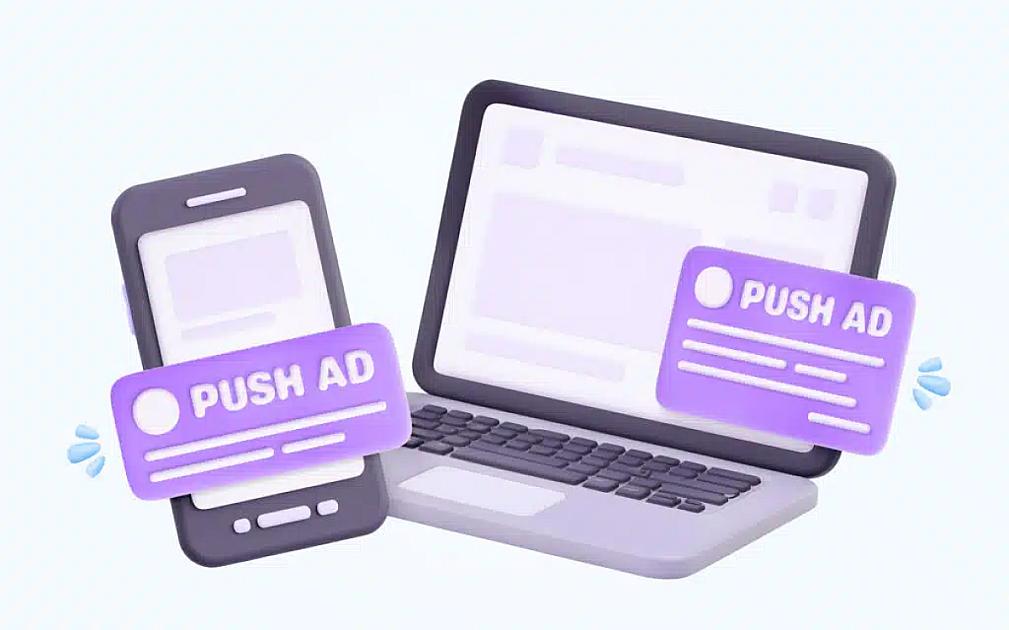
Push notification advertising is one of the most misunderstood channels in digital marketing. On the surface, it appears simple — small pop-up notifications delivered directly to users' devices. But for the right offers and verticals, push traffic networks deliver massive scale at CPCs that would be unthinkable on Google or Meta. Understanding how to use push advertising effectively is a significant advantage for media buyers in competitive verticals.
How Push Notification Advertising Works
Push notification ads are delivered to users who have previously subscribed to receive notifications from specific websites or apps. When a user visits a website and accepts the browser notification prompt, they enter a publisher's push subscriber list.
Advertising networks aggregate these subscriber lists across thousands of publisher sites and allow advertisers to send targeted push notifications to these subscribers. From the user's perspective, the notification appears as a small pop-up in their browser or on their device — similar to a regular website notification.
The key difference from other advertising: push notifications are delivered to users even when they are not actively browsing the internet, creating an interrupt-style ad format that achieves awareness regardless of current online activity.
Push Traffic Networks: The Major Players
PropellerAds: One of the largest push traffic networks, with billions of daily impressions across global geographies. Strong for finance, gaming, and sweepstakes offers.
RichPush: Premium push network known for high-quality traffic and advanced targeting options.
Zeropark: Multi-format traffic platform including push, pop, and domain redirect traffic.
Adsterra: Large network with strong performance across gaming, utilities, and app installs.
Each network has different audience quality, geographic strength, and offer category performance. Testing across multiple networks is standard practice for serious push advertisers.
Targeting Options on Push Networks
Geographic targeting: Country, region, and city-level targeting. Critical for offers with geographic restrictions.
Device and OS targeting: Desktop vs. mobile, Windows vs. Android vs. iOS. Push traffic has very different performance characteristics across device types.
Carrier targeting: Target users on specific mobile carriers. Important for carrier-billed offers.
Subscriber freshness: How recently a user subscribed to the push list. Fresh subscribers (0–7 days) are far more engaged than aged ones. Premium fresh traffic costs more but converts significantly better.
Vertical interests: Some networks allow interest-based targeting based on the categories of publisher sites where subscriptions originated.
Offer Types That Perform on Push
Sweepstakes and prize offers: The broad appeal of prize opportunities makes them ideal for the less-targeted nature of push traffic.
Finance offers: Credit cards, loans, and investment platforms reach large audiences efficiently on push.
Utilities and software: Antivirus, VPN, and system utility apps convert well on desktop push traffic.
Dating offers: Push's interrupt nature makes it effective for dating app promotions.
Gaming: Casino, mobile gaming, and sports betting offers are major push advertising categories.
Creative Best Practices for Push Ads
Push ads have two elements: an icon image and a short headline/description. Given the minimal creative real estate, every word and pixel matters.
Icon images: Use bright, high-contrast images with a single clear focal point. Faces, exclamation points, and recognizable brand imagery all perform well.
Headlines: Short, curiosity-driven headlines with urgency or benefit statements outperform vague or clever copy. Get to the point in 30 characters or less.
Test click-through rates obsessively: Push advertising is a volume game. Small improvements in CTR compound across millions of impressions into significant traffic differences.